List of invasive plant species in Massachusetts
Numerous non-native plants have been introduced to Massachusetts in the United States and many of them have become invasive species. The Massachusetts Invasive Plant Advisory Group (MIPAG) is a voluntary collaborative that was established in 1995 to advise the Commonwealth of Massachusetts on invasive plant species. They have categorized invasive plants as "invasive," "likely invasive," and "potentially invasive." The following is a list of non-native invasive plant species established in Massachusetts.[1]
Invasive
An invasive plant in Massachusetts is a non-native species (including its subspecies, varieties, forms, synonyms, and cultivars) that establishes self-sustaining populations in native or minimally managed systems and causes ecological or economic harm by becoming dominant or disruptive.[2]
| Image | Scientific name | Common name |
|---|---|---|
.jpg)
|
Acer platanoides | Norway maple |
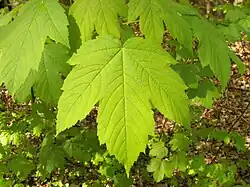
|
Acer pseudoplatanus | Sycamore maple |
.jpg)
|
Aegopodium podagraria | Ground elder; goutweed |
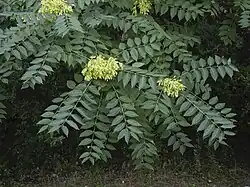
|
Ailanthus altissima | Tree-of-heaven |
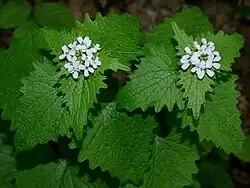
|
Alliaria petiolata | Garlic mustard |
.jpg)
|
Alnus glutinosa | European alder; black alder |
.jpg)
|
Berberis thunbergii | Japanese barberry |

|
Cabomba caroliniana | Carolina fanwort[3] |
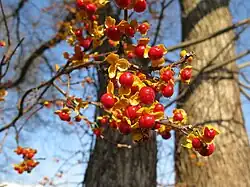
|
Celastrus orbiculatus | Oriental bittersweet |
.jpg)
|
Vincetoxicum nigrum | Black swallow-wort |
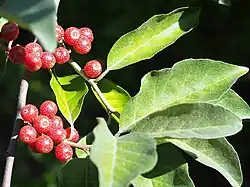
|
Elaeagnus umbellata | Autumn olive |
.jpg)
|
Eragrostis curvula | Weeping lovegrass |
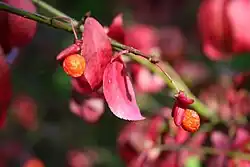
|
Euonymus alatus | Winged euonymus; burning bush |

|
Euphorbia esula | Leafy spurge |
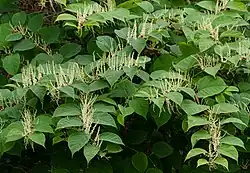
|
Fallopia japonica | Japanese knotweed |
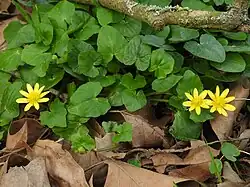
|
Ficaria verna | Lesser celandine |
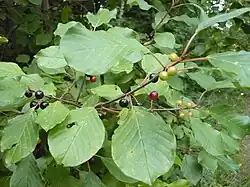
|
Frangula alnus | Glossy buckthorn |
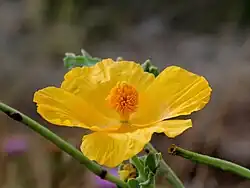
|
Glaucium flavum | Sea poppy |
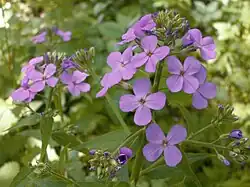
|
Hesperis matronalis | Dame's rocket |

|
Iris pseudacorus | Yellow iris |
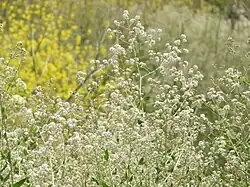
|
Lepidium latifolium | Broad-leaved pepperweed |
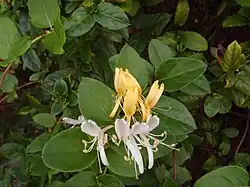
|
Lonicera japonica | Japanese honeysuckle |
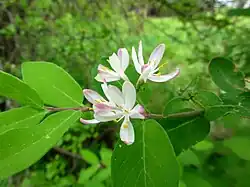
|
Lonicera morrowii | Morrow's honeysuckle |
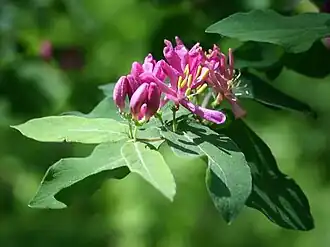
|
Lonicera x bella | Bell's honeysuckle |
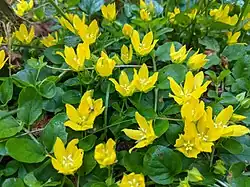
|
Lysimachia nummularia | Creeping jenny |
_-_geograph.org.uk_-_942585.jpg)
|
Lythrum salicaria | Purple loosestrife[3] |
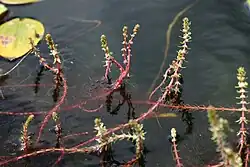
|
Myriophyllum heterophyllum | Variable water-milfoil[3] |
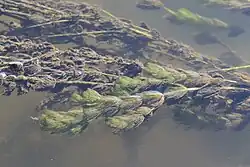
|
Myriophyllum spicatum | European water-milfoil[3] |
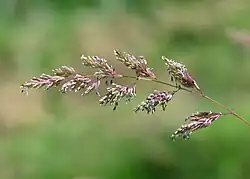
|
Phalaris arundinacea | Reed canary-grass |
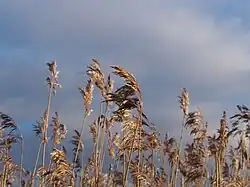
|
Phragmites australis | Common reed[3] |
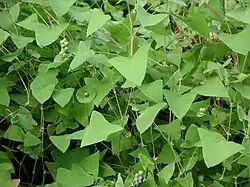
|
Polygonum perfoliata | Mile-a-minute vine |
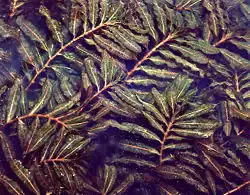
|
Potamogeton crispus | Curly-leaved pondweed[3] |
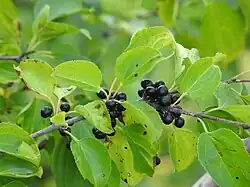
|
Rhamnus cathartica | Common buckthorn |
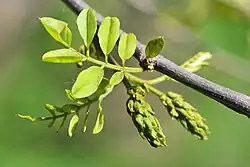
|
Robinia pseudoacacia | Black locust |
|
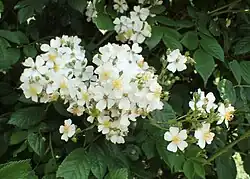
Rosa multiflora | Multiflora rose |
|
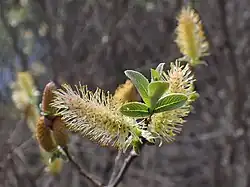
Salix atrocinerea | Large gray willow |
|
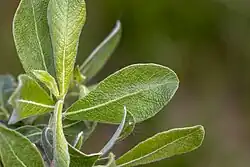
Salix cinerea | Rusty willow |

|
Trapa natans | Water-chestnut[3] |
Likely invasive
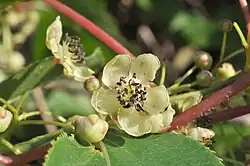
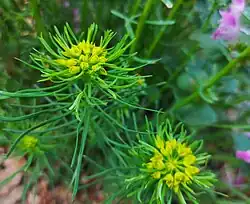
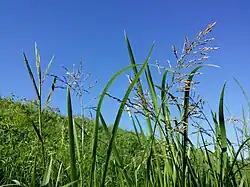
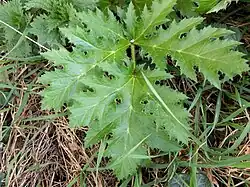
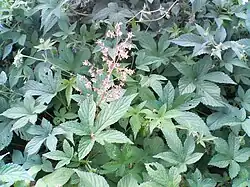
A likely invasive plant in Massachusetts is a non-native species that has become naturalized but does not fully meet the criteria for designation as invasive.[4]
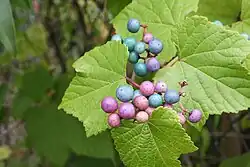
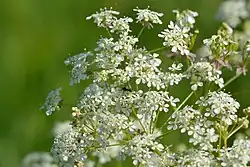
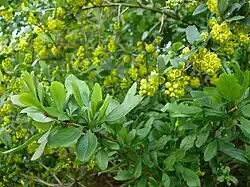
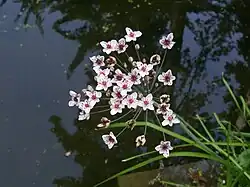
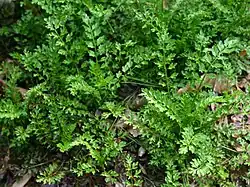
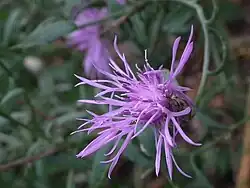
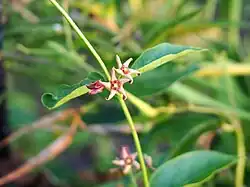
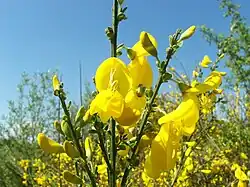

.jpg)
.jpg)


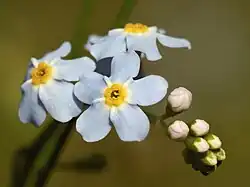
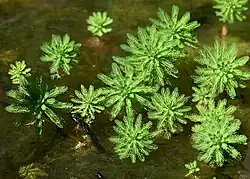
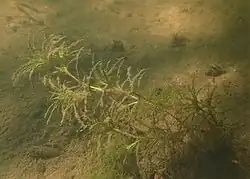
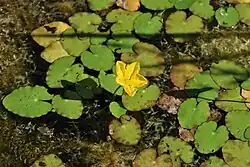

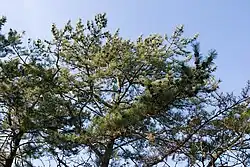
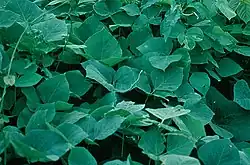
.JPG)
_(efd4465d-0c08-4bf7-b7f7-62714b8feaf4).JPG)
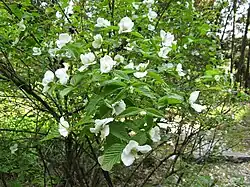
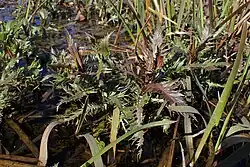

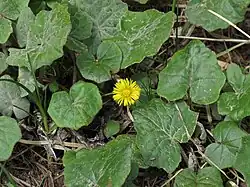
Potentially invasive
A potentially invasive plant in Massachusetts is a non-native species which has not yet naturalized in the state, but is expected to become invasive in minimally managed habitats.[5]
| Image | Scientific name | Common name |
|---|---|---|
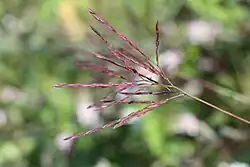
|
Arthraxon hispidus | Hairy joint grass |
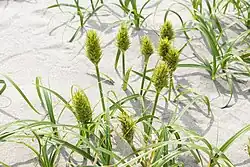
|
Carex kobomugi | Japanese sedge |
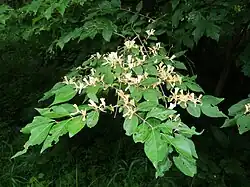
|
Lonicera maackii | Amur honeysuckle |
References
- ^ "Invasive Plants". Mass.gov. Archived from the original on 2025-01-05. Retrieved 2025-02-06.
- ^ "Plants voted as: INVASIVE". Massachusetts Invasive Plants Advisory Group.
- ^ a b c d e f g h i j k l m Hellquist, C. Barre; Straub, James (May 2002). A Guide to Selected Invasive Non-native Aquatic Species in Massachusetts (PDF). Massachusetts Department of Environmental Management.
- ^ "Plants voted as: LIKELY INVASIVE". Massachusetts Invasive Plants Advisory Group.
- ^ "Plants voted as: POTENTIALLY INVASIVE". Massachusetts Invasive Plants Advisory Group.