Portal:North America
The North America Portal
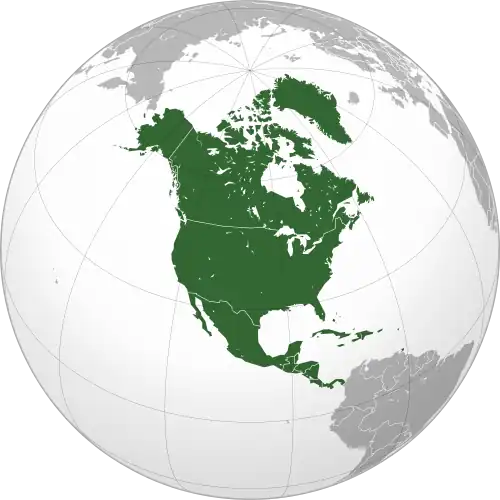
North America is a continent in the Northern and Western hemispheres. North America is bordered to the north by the Arctic Ocean, to the east by the Atlantic Ocean, to the southeast by South America and the Caribbean Sea, and to the south and west by the Pacific Ocean. The region includes Middle America comprising the Caribbean, Central America, and Northern America.
North America covers an area of around 24,709,000 square kilometers (9,540,000 square miles), representing approximately 16.5% of Earth's land area and 4.8% of its total surface area. It is the third-largest continent by size after Asia and Africa, and the fourth-largest continent by population after Asia, Africa, and Europe. As of 2021, North America's population was estimated as over 592 million people in 23 independent states and territories, or about 7.5% of the world's population. In human geography, the terms "North America" and "North American" refers to Canada, Greenland, Mexico, Saint Pierre and Miquelon, and the United States.
It is unknown with certainty how and when first human populations first reached North America. People were known to live in the Americas at least 20,000 years ago, but various evidence points to possibly earlier dates. The Paleo-Indian period in North America followed the Last Glacial Period, and lasted until about 10,000 years ago when the Archaic period began. The classic stage followed the Archaic period, and lasted from approximately the 6th to 13th centuries. Beginning in 1000 AD, the Norse were the first Europeans to begin exploring and ultimately colonizing areas of North America.
In 1492, the exploratory voyages of Christopher Columbus led to a transatlantic exchange, including migrations of European settlers during the Age of Discovery and the early modern period. Present-day cultural and ethnic patterns reflect interactions between European colonists, indigenous peoples, enslaved Africans, immigrants from Europe, Asia, and descendants of these respective groups. (Full article...)
 Featured article -
.svg.png)
The national flag of Canada, popularly referred to as the Maple Leaf, consists of a red field with a white square at its centre in the ratio of 1∶2∶1, in which is featured one stylized, red, 11-pointed maple leaf charged in the centre. It is the first flag to have been adopted by both houses of Parliament and officially proclaimed by the Canadian monarch as the country's official national flag. The flag has become the predominant and most recognizable national symbol of Canada.
In 1964, Prime Minister Lester B. Pearson formed a committee to resolve the ongoing issue of the lack of an official Canadian flag, sparking a debate about a flag change to replace the Union Flag. Out of three choices, the maple leaf design by Mount Allison University historian George Stanley, based on the flag of the Royal Military College of Canada, was selected. The flag officially appeared on February 15, 1965; the date is now celebrated annually as National Flag of Canada Day. (Full article...)
Featured picture -

Featured biography -
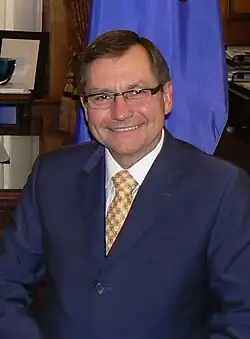
Edward Michael Stelmach ECA AOE (/ˈstɛlmæk/; born May 11, 1951) is a Canadian politician who served as the 13th premier of Alberta, from 2006 to 2011. The grandson of Ukrainian immigrants, Stelmach was born and raised on a farm near Lamont and fluently speaks the distinctive Canadian dialect of Ukrainian. He spent his entire pre-political adult life as a farmer, except for some time spent studying at the University of Alberta. His first foray into politics was a 1986 municipal election, when he was elected to Lamont County council. A year into his term, he was appointed reeve. He continued in this position until his entry into provincial politics.
In the 1993 provincial election, Stelmach was elected as the Member of the Legislative Assembly (MLA) for Vegreville-Viking (later Fort Saskatchewan-Vegreville). A Progressive Conservative, he served in the cabinets of Ralph Klein—at various times holding the portfolios of Intergovernmental Relations, Transportation, Infrastructure, and Agriculture, Food, and Rural Development—where he developed a reputation as a low-key politician who avoided the limelight. When Klein resigned the party's leadership in 2006, Stelmach was among the first to present his candidature to replace him. After a third-place finish on the first ballot of the leadership race, he won an upset second ballot victory over former provincial treasurer Jim Dinning. (Full article...)
 Good article -
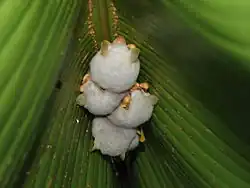
The Honduran white bat (Ectophylla alba), also called the Caribbean white tent-making bat, is a species of bat in the family Phyllostomatidae. It is the only member of the genus Ectophylla. The genus and the species were both scientifically described for the first time in 1892. It has distinctive, entirely white fur, which is only found in six of the roughly 1,300 known species of bat. It constructs "tents" out of understory plant leaves by strategically cutting the leaf ribs with its teeth; it roosts in these tents during the day. It is a specialist frugivore, consuming almost exclusively the fruits of one species of fig. Females can likely become pregnant twice per year, giving birth to one offspring at a time.
It is found in Honduras, Nicaragua, Costa Rica and western Panama at elevations from sea level to 700 m (2,300 ft). Due to habitat loss, it is evaluated as near-threatened by the IUCN. Its bright yellow ears, nose-leaf, and lips are a result of carotenoid deposition; the mechanism of this deposition is being researched as a way to understand and combat macular degeneration in humans. (Full article...)
Did you know...
- ... that Confederate General John W. Frazer surrendered the Cumberland Gap during the American Civil War without a fight?
- ... that tequila was first produced in the 16th century?
- ...that Navassa Island off the west coast of Haiti is claimed by the United States as an unorganized unincorporated territory?
- ... that Raul Macias, a Cuban-Mexican boxer parlayed his popularity into a successful career in telenovelas?
- ...that Jacob Piatt Dunn in 1886 wrote the first scholarly history concerning the Indian Wars?
Selected panorama
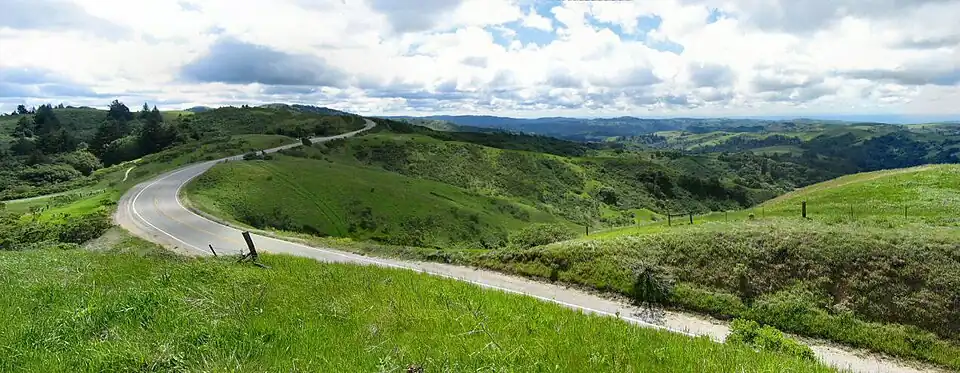
Topics
| Sovereign states |
| | |||||||||||
|---|---|---|---|---|---|---|---|---|---|---|---|---|---|
| Dependencies |
| ||||||||||||
Categories

List articles

Related portals
Northern America
Central America
Caribbean
WikiProjects
 North America
- Canada
-
 Greenland
 -
 Mexico
 -
 Saint Pierre and Miquelon
 -
 United States
  Central America
-
 Belize
 -
 Costa Rica
 -
 El Salvador
 -
 Guatemala
 -
.svg.png) Honduras
Honduras -
 Nicaragua
 -
 Panama
  Mesoamerica
 Caribbean
-
 Antigua and Barbuda
 -
 Bahamas
 -
 Barbados
 -
 Bermuda
 -
 Cuba
Cuba -
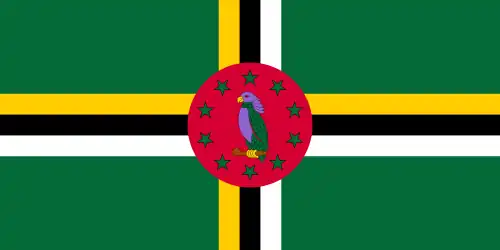 Dominica
 -
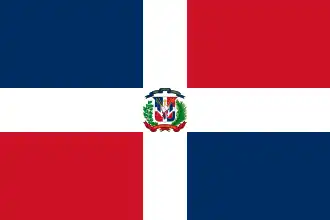 Dominican Republic
 -
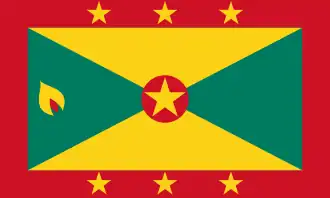 Grenada
 -
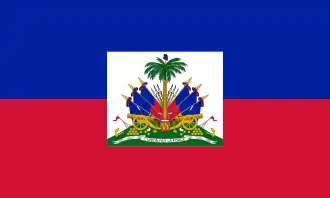 Haiti
Haiti -
 Jamaica
 -
 Puerto Rico
 -
 Saint Kitts and Nevis
 -
 Saint Lucia
 -
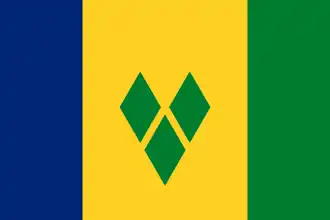 Saint Vincent and the Grenadines
 -
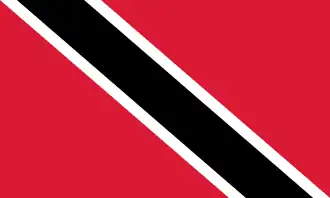 Trinidad and Tobago
Associated Wikimedia
The following Wikimedia Foundation sister projects provide more on this subject:
-
 Commons
Free media repository -
 Wikibooks
Free textbooks and manuals -
 Wikidata
Free knowledge base -
 Wikinews
Free-content news -
 Wikiquote
Collection of quotations -
 Wikisource
Free-content library -
 Wikiversity
Free learning tools -
 Wikivoyage
Free travel guide -
 Wiktionary
Dictionary and thesaurus
More portals
-
 List of all portals
 -

-

-

-
-

-

-

-

-

-
 Random portal
 -
 WikiProject Portals