St. Barnabas Episcopal Church (Snow Hill, North Carolina)
St. Barnabas Episcopal Church | |
 Front yard of the church | |
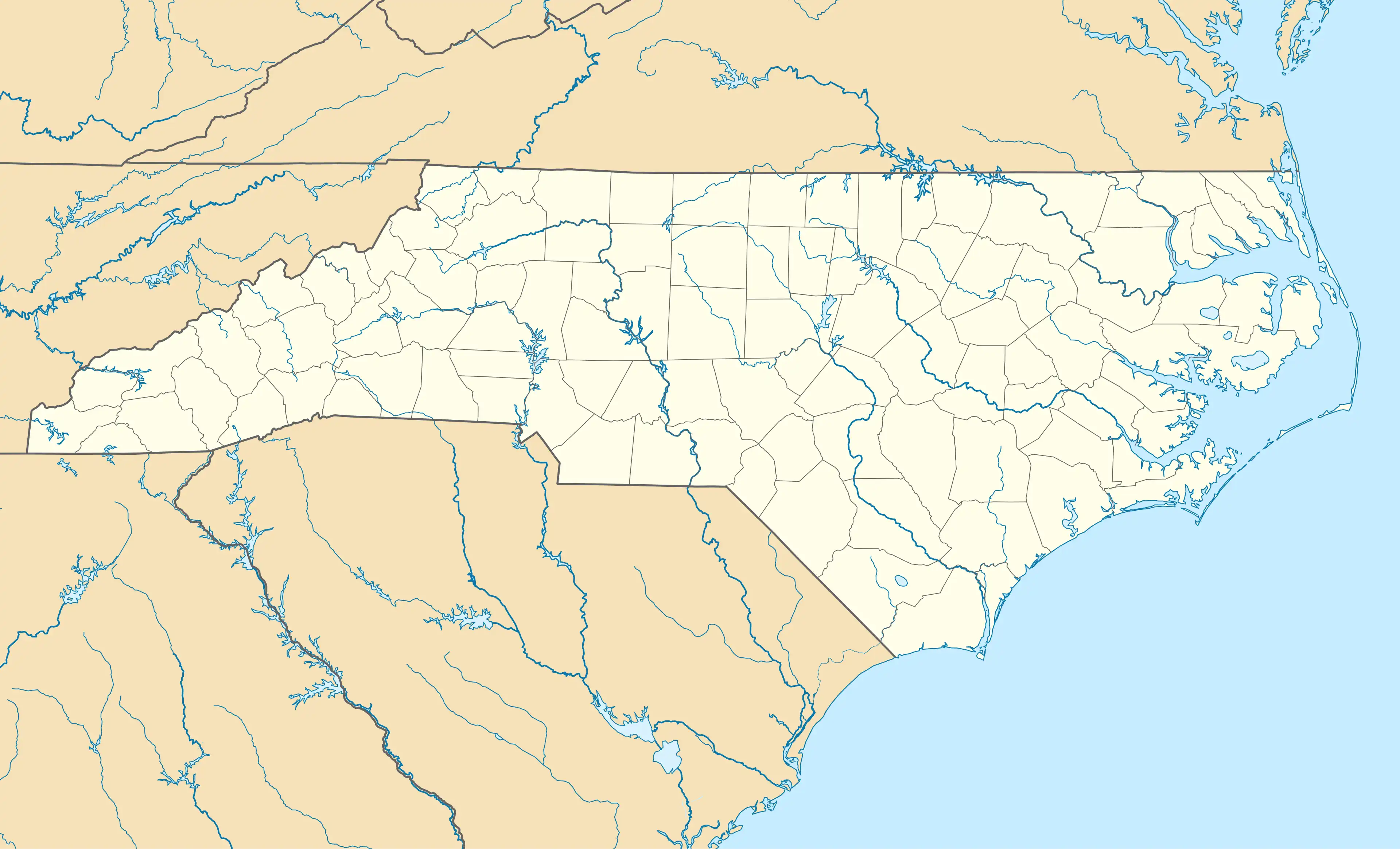  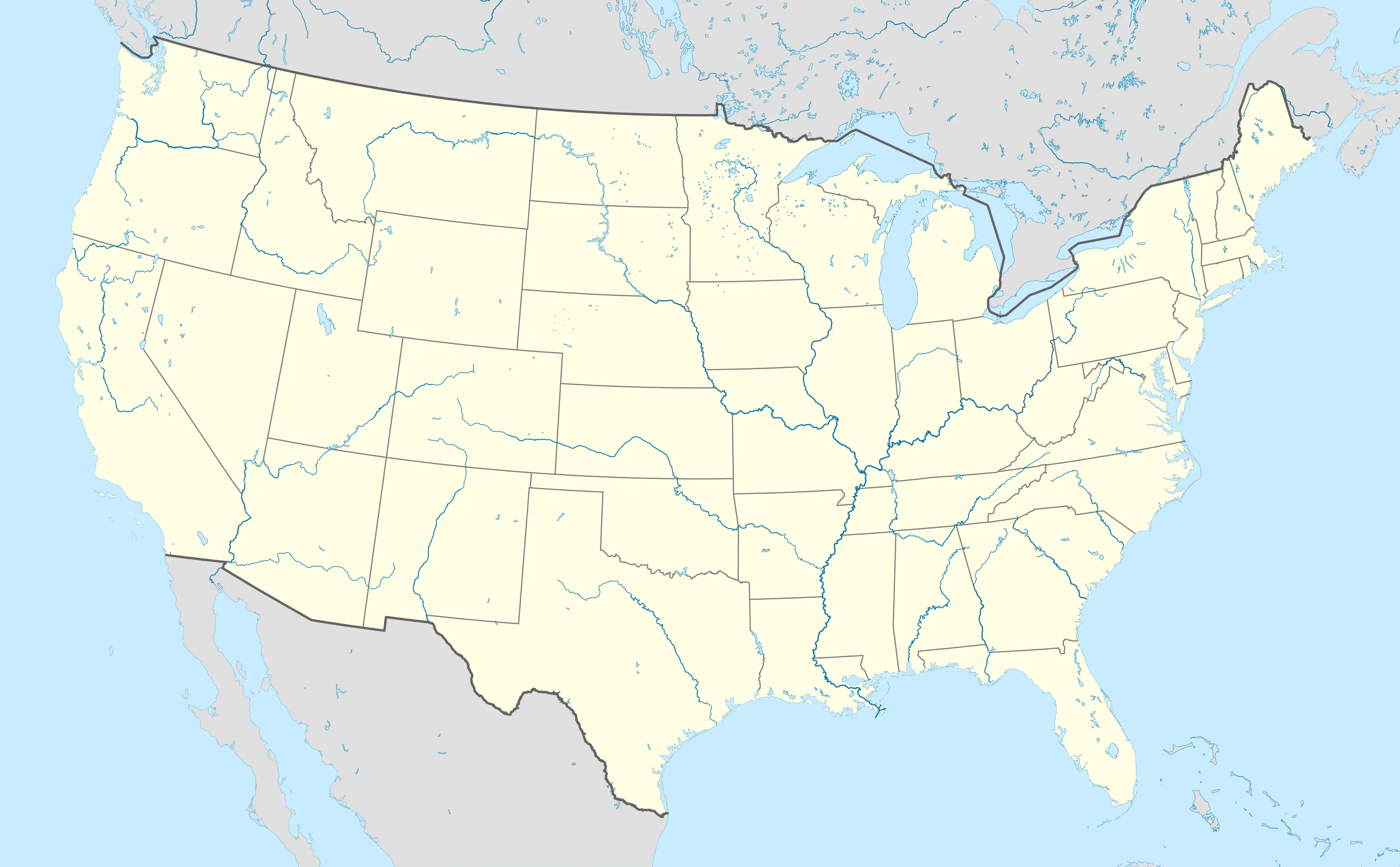 | |
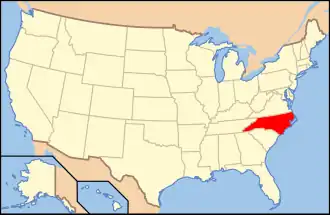
| Location | SE 4th St. and St. Barnabas Rd., Snow Hill, North Carolina |
|---|---|
| Coordinates | 35°27′5″N 77°40′15″W / 35.45139°N 77.67083°W |
| Area | 2.5 acres (1.0 ha) |
| Built | 1887 |
| Architect | Faircloth, W.T.; Porter & Godwin |
| Architectural style | Gothic Revival |
| NRHP reference No. | 79003337[1] |
| Added to NRHP | October 10, 1979 |
St. Barnabas Episcopal Church is a historic Episcopal church located at SE 4th Street and St. Barnabas Road in Snow Hill, Greene County, North Carolina. It was built in 1887, and is a small, rectangular, Carpenter Gothic style frame building. It sits on a low brick foundation and has a steep gable roof.[2] Though the sixteenth church built in Greene County, it was the only Episcopal church in Greene County for seventy-five years.[2]
History
The Episcopal Diocese of East Carolina was formed by the General Convention of the Episcopal Church on October 22, 1883.[2] In the following December, John D. Grimsley represented the congregation of St. Barnabas at a convention held at Christ Church in New Bern, North Carolina, to organize the newly formed diocese.[2] A new congregation formed in Snow Hill was assigned to the Rev. Israel Harding as part of his circuit of churches.[2] By May 1884, Harding officiated four services in Snow Hill, despite the lack of a church building.[2] At that time, the earliest services were held in the Green County Courthouse, but later the Baptist Church allowed the congregation to use its facilities.[2] There was always the intention to build a house of worship.[2] Bishop Alfred Watson, after delivering a sermon in the courthouse on October 24, 1884, spoke with members of the congregation regarding the erection of a church.[2] Two and one-half acres owned by Aquilla Sugg were acquired by the Diocese in 1883, but no funds were available for construction.[2] Using funds raised locally, John D. Grimsley, William E. Best, John Harvey, and Theophilus Edwards brokered a deal with W. T. Faircloth and the firm of Porter and Godwin to construct the building ,which was completed in 1887.[2] The new church was named St. Barnabas, which had been the name of the congregation.[2]
The Rev. Israel Harding remained the priest in charge of St. Barnabas until his death in 1891.[2] The church was not consecrated during Harding's lifetime because a canon of the Episcopal Church withheld the consecration of a parish until it had paid off its debt.[2] The final loan payment was made in early 1893, and on April 23 of that year, Bishop Alfred Watson consecrated St. Barnabas in honor of Israel Harding.[2]
In 1952, sparks from the wood stove ignited the shingle roofing underneath the tin covering.[2] The tin prevented the fire from destroying the church.[2] G. Frank Warren, the treasurer of St. Barnabas from 1938 to 1962, had the damaged roof replaced with timber cut to resemble the original woodwork.[2]
Over time, the older members of the church passed away and, the Diocese became increasingly reluctant to assign a regular minister to the congregation.[2] The number of communicants dwindled, until in 1962, the Diocese could no longer justify keeping the church active.[2]
In 1971, five teenage boys entered the abandoned church and wrecked the interior.[2] The stained glass window over the altar was broken; hymn books were torn and used as projectiles to destroy the glass light fixtures; a hole was knocked in the ceiling; swinging doors to the vestibule were ripped to shreds; roofing cement was poured on the floor, carpet, and pews; the baptismal font was chipped and broken; covers for the kneelers were split open; the pump organ (which had been converted to electricity) was damaged beyond estimation; and the church and grounds were littered with beer cans and other debris.[2]
Today, St. Barnabas is no longer a parish and currently meets only twice a year, on a Saturday near the feast day of St. Barnabas and another Saturday in October, celebrating the Holy Eucharist from the 1928 American Book of Common Prayer.[3] Its last service as a parish was held in 1962.[4]
St. Barnabas is under the pastoral care of St. Mary's Episcopal Church in Kinston, North Carolina.[3]
It was listed on the National Register of Historic Places in 1979.[1]
References
- ^ a b "National Register Information System". National Register of Historic Places. National Park Service. March 13, 2009.
- ^ a b c d e f g h i j k l m n o p q r s t u v Catherine W. Bishir and Jerry L. Cross (June 1979). "St. Barnabas Episcopal Church" (pdf). National Register of Historic Places - Nomination and Inventory. North Carolina State Historic Preservation Office. Retrieved 2025-11-11.
- ^ a b "St. Barnabas Chapel, Snow Hill, North Carolina | Episcopal Asset Map". www.episcopalassetmap.org. Retrieved 2025-11-12.
- ^ National Park Service (1979). National Register of Historic Places Inventory—Nomination Form: St. Barnabas Episcopal Church. United States Department of the Interior, Heritage Conservation and Recreation Service. Prepared by Catherine W. Bishir, N.C. Division of Archives and History.