Localités du Golan dépeuplées par Israël

Carte démographique du Golan avant 1967.
En vert, les villages arabes musulmans ; en rouge, les villages alaouites ; en bleu ciel, les villages Turkmènes ; en orangé clair, les villages druzes ; en orange soutenu, les villages Tcherkesses.
Carte des localités syriennes dépeuplées pendant la guerre de 1967 et depuis.
Carte démographique actuelle (2022) : ne restent que les Druzes dans le Golan, auxquels s’ajoutent les colons (même légende que pour la première carte, avec en plus les colonies israéliennes en bleu marine).

Avant la guerre des Six-Jours et la guerre du Kippour, le plateau du Golan comptait 312 localités habitées, dont 2 villes, 163 villages et 108 fermes[1]. En 1966, la population syrienne du plateau du Golan était estimée à 147 613[2]. Israël s’est emparé d’environ 70 % du plateau du Golan à la fin de la guerre des Six-Jours[3]. De nombreux habitants ont fui durant les combats[4], d’autres ont été expulsés par Israël[5],[6],[7],[8] et d’autres ont été évacués par l’armée syrienne[5]. Le Washington Report on Middle East Affairs de 1992 a qualifié les actes de l’État israélien de nettoyage ethnique[9].

Conquête du Golan par Israël

Expulsions

Il y a des cas de civils syriens tués par des habitants syriens, y compris en détruisant leurs maisons où ils se trouvaient toujours[10] :

« At this stage [during the war] the instruction that we have received was to

go and check that no ‘guys’ are left hiding. We did it in the first villages [conquered] on top of the [Golan] Heights . . . . There were a few cases that I don’t want to talk about.’ What does it mean? Katz: ‘They killed people that should not have been killed. Syrian citizens’ . . . There were a few guys of mine who killed some Arab citizens’ . . . Why did they kill them? ‘It was out of stupidity, something that should not have been done, and they were kicked out of the regiment. All the rest of the Golan dwellers were deported. Not one remained’. How did it happen? ‘They destroyed a house on top of its dwellers . . .

It was a war crime. . . . It drove me out of my mind »

« Avishay Katz, commandant de réserve du 602e régiment du génie, témoigne :

— À ce moment de la guerre, les ordres que nous avions reçu étaient de vérifier que personne n’était resté caché après [le départ]. Nous l’avons fait dans les premiers villages [conquis] sur le haut du plateau... Il y a quelques cas dont je ne veux pas parler.
— Qu’est-ce que cela signifie ?
— Ils ont tué des personnes qui n’auraient pas dû être tuées. Des civils syriens [...] Il y a quelques uns de mes gars qui ont tué des civils arabes [...]
— Pourquoi les ont-ils tués ?
— C’était au-delà de l’idiotie, quelque chose qui ne devrait pas arriver, et ils ont été virés du régiment. Tous les autres habitants du Golan ont été déportés. Aucun ne reste.
— Que s’est-il passé ?

— Ils ont détruit une maison sur ses habitants [...] C’était un crime de guerre [...] Ça m’a mis hors de moi ! »

Une ligne de cessez-le-feu est tracée et une grande partie du plateau est placée sous contrôle militaire israélien, dont la ville de Quneitra, 139 villages et 61 fermes[1]. Le recensement de 1967 conduit par l’armée israélienne n’en comptabilise que huit, dont Quneitra[1]. Un des villages qui n’est alors pas vidé de sa population, Shayta, est en partie détruit en 1967 et un poste militaire est construit à son emplacement[11]. Entre 1971 et 1972, la suppression du village est achevée, les habitants restant étant déportés à Mas'ade, un des villages sous contrôle israélien. Ce blog qualifie ceci de nettoyage ethnique[11],[12]. Selon le blog Focaal, « 95 % des Syriens de la région ont été déplacés de force et seuls cinq villages sur les 340 villages et fermes, subsistent[13]. »

Le chef de l’administration israélienne pour la supervision et la gestion des démolitions du plateau du Golan Heights propose la démolition de 127 villages dépeuplés, dont 90 villages « abandonnés » devant être détruits peu après le [14],[15]. Les démolitions sont menées par des entreprises privées et seuls cinq villages sont épargnés (Majdal Shams, Buq'ata, ‘Ayn Qunyah, Mas'ade et al-Ghajar))[6],[15],[16],[17],[18],[19]. Après les démolitions, les terres sont attribuées à des colons israéliens[20]. Seuls les bâtiments ayant un intérêt archéologie et ceux pouvant avoir un intérêt pour les colonies juives planifiées sont conservés[15].

Après la guerre du Kippour (1973), la Syrie récupère une partie du plateau du Golan, dont Quneitra, qui est passée plusieurs fois d’un camp à l’autre durant la guerre. Selon un rapport du comité spécial des Nations unies Special Committee, l’armée israélienne a volontairement détruit la ville avant son retrait, en 1974[21].

En 2024, après l’élargissement de l’occupation israélienne à de nouveaux villages du Golan, Israël tenta de vider plusieurs villages syriens nouvellement occupés[22]. Après une diminution de la population, Israël commença à détruire les réseaux d’eau et d’électricité pour forcer les habitants à fuir[22]. Le , plus de 100 familles syriennes sont expulsées du plateau du Golan par l’armée israélienne[23]. Des témoins ont affirmé que des soldats israéliens leur ont tiré dessus et sur leurs maisons[23]. Les observateurs des Nations unies ont retiré le drapeau israélien des zones nouvellement occupées[23].

Villes et villages dépeuplés et démolis

Villages dépeuplés

Cette liste présente les villages syriens dépeuplés après la guerre de 1967 par ordre alphabétique, toutes les parties du nom étant traitées de la même manière, y compris l’article (al-, as-, etc.), mais les diacritiques ne sont pas pris en compte (par exemple ‘A est traité comme A).

Certains villages peuvent être cités deux fois avec des variantes orthographiques provenant de différentes sources.

Transcription romane Arabe
A'ameriya (Asbatta)[24]
Abu Kheit[24],[25]
Abu Tuleh[24] (or Abu Foula)[26] أﺑﻮ ﻓﻮﻟﺔ[26]
Ahmadiyah[24],[27]
Al ‘Al[24],[27] اﻟﻌﺎل[28]
Al Slouqiya al Gharbiya[26],[24] اﻟﺴﻠﻮﻗﻴﺔ اﻟﻐﺮﺑﻴﺔ[26]
Al Slouqiya al Sharqiya[26] اﻟﺴﻠﻮﻗﻴﺔ اﻟﺸﺮﻗﻴﺔ[26]
Ala Amriya[25]
‘Almen[25],[24]
Amert Lferj[25],[24]
‘Amoudiya[29],[24] ﻋﻤﻮدﻳﺔ[29]
Arba‘in[25],[24]
Asaliyah[25],[24]
‘Ayn al-Hamra[25]
‘Ayn al-Qura[29],[24] ﻋﻴﻦ اﻟﻘﺮى[29]
‘Ayn as Sumsun[27],[24] ﻋﻴﻦ ﺳﻤﺴﻢ[29]
‘Ayn al-Tina[25]
‘Ayn ‘Ayshah[27],[25],[24]
'Ayn Fit[27],[24] ﻋﻴﻦ ﻓﻴﺖ[30]
‘Ayn Maymun[27],[25],[24]
‘Ayn Sa‘d[28] ﻋﻴﻦ ﺳﻌﺪ[28]
‘Ayn Ziwan[27],[24] ﻋﻴﻦ زﻳﻮان[29]
‘Ayshiyya[29] ﻋﻴﺴﻴﺔ or اﻟﻌﻴﺸﻴﺔ[29]
‘Azaziyat[30] ﻋﺰﻳﺰﻳﺎت[30]
Bajjah[27]
Baniyas[27]
Barjeiat[25]
Basset Al Jawkhadar[25]
Batah[25]
Bir al-Shquq[28] ﺑﻴﺮ اﻟﺸﻘﻮق[28]
Bjuriyah[25] اﻟﺒﺠﻮرﻳﺔ[26]
Dabboudiyah[24],[28] دﺑﻮﺳﻴﺔ[28]
Dabburah[27] دﺑﻮرة[29]
Dalhamieh[24],[25]
Dalwa[25],[29] دﻟﻮة[29]
Deir mfaddil[25]
Deir Raheb (Ein Samsam)[24]
Deir Siras[27] دﻳﺮ ﺳﺮاس[29]
Derdara[25],[26] دردارة[26]
Doka[24]
‘Eshsha[26],[24] اﻟﻌﺸﺔ[26]
Fahham[25],[26] ﻓﺤﻢ or اﻟﻔﺤﺎم[26]
Faraj[24],[26] اﻟﻔﺮج[26]
Fazarah[27]
Fiq[27] ﻓﻴﻖ[28]
Furn[27],[24] اﻟﻔﺮن[30]
Ghadhiya[26],[25],[24] اﻟﻐﻈﻴﺔ[26]
Ghzill[25]
Hafar[27] ﺣﻔﺮ[29]
Hamidiyah[31] (repopulated after 1974)[27]
Haytal[27] ﺧﺘﻞ or ﺣﺘﻴﻞ[28]
Husayniyah[27]
Huwaylizah[27]
‘Illayqa[29] ﻋﻠﻴﻘﺔ[29]
Jaraba[28] ﺟﺮﺑﺎ or ﺟﺮاﺑﺔ[28]
Jawkhadar[28],[24] اﻟﺠﺤﺪر or اﻟﺠﻮﺧﺪر[28]
Jbab al-Mis[30] ﺟﺒﺐ اﻟﻤﻴﺲ[29]
Jirniyya[28] ﺟﺮﻧﻴﺔ[28]
Jlaybina[29] ﺟﻠﺒﻴﻨﺔ or ﺟﻠﻴﺒﻴﻨﺔ[29]
Jubata ez-Zeit[32] ﺟﺒﺎﺗﺎ اﻟﺰﻳﺖ[30]
Jubbayn[27] ﺟﺒﻴﻦ[28]
Jubet Ra’abana[25]
Jurmaiya[25]
Juwayzah[27],[25] ﺟﻮﻳﺰة[29]
Juwayzah al-Shamaliya[29] ﺟﻮﻳﺰة اﻟﺸﻤﺎﻟﻴﺔ or ﺟﻮﻳﺰة واﺳﻂ[29]
Kafr Alma[28] ﻛﻔﺮ اﻟﻤﺎ[28]
Kafr ‘Aqab[26] ﻛﻔﺮ ﻋﻘﺎب or ﻛﻔﺮ ﻋﻘﺐ[26]
Kafr Hareb[28] ﻛﻔﺮ ﺧﺮب[28]
Kafr Naffakh[27] ﻛﻔﺮ ﻧﻔﺎخ[29]
Kbash[25]
Khisfin[26],[33] ﺧﺴﻔﻴﻦ[26]
Khokha[24],[28] ﺧﻮﺧﺔ[28]
Khueikha[25],[27]
Khushniyeh[27],[24] ﺧﺸﻨﻴﺔ[26]
Kisrin or Qisrin[26] ﻗﺼﺮﻳﻦ[26]
Krejz al Wadi[25]
Kursi[26] اﻟﻜﺮﺳﻲ[26]
Ma‘barah[27]
Majduliyah[25]
Malsa'[27]
Mamwayra[29] ﻣﻤﻮﻳﺮة[29]
Mansura[24]
Mashfa‘[26] ﻣﺸﻔﻊ[26]
Mashta[25] (Beira)[26],[24] اﻟﺒﻴﺮة[26]
Mesa’diya[25]
Mihjar[26],[24] اﻟﻤﺤﺠﺎر[26]
Mishrfawy[26] ﻣﺸﺮﻓﺎوي[26]
Mjeihiya[25],[24]
Momsieh[24],[29] (Ghassaniyah)[27],[25] ﻣﻤﺴﻴﺔ[29]
Mudiriya[29] (Qahtaniya)[25] ﻣﺪﻳﺮﻳﺔ[29]
Mughir[27]
Mughr Shab’a[27] ﻣﻐﺎر ﺷﺒﻌﺔ ُﻣﻐﺮ or ﺷﺒﻌﺔ[29]
Muwaysah[27],[24] or Mghar Muwaysah[29] ﻣﻐﺎر ﻣﻮﻳﺴﺔ[29]
Nab[25]
Naqib[28] اﻟﻨﻘﻴﺐ[28]
Na‘ran[27] ﻧﻌﺮان[29]
Nukhaylah[27] ﻧﺨﻴﻠﺔ[29]
Qadiriyah[27],[29],[24] ﻗﺪرﻳﺔ[29]
Qafira[29] ﻗﻔﻴﺮة[29]
Qarahta[29] ﻗﺮﺣﺘﺎ[29]
Qara‘na (Qal' al Qara‘inah)[27],[26] ﻗﺮاﻋﻨﺔ[26]
Qasr Bardawil[25]
Qerniyat[25]
Qila[27]
Qila‘[30] ﻗﻠﻊ[30]
Qouneitra[34]
Qunna‘ba[30] ﻗﻨﺎﺑﺔ or اﻟﻘﻨﻌﺒﺔ[30]
Qusaybah al-Jadidah[27],[25]
Rafeed[28],[24] اﻟﺮﻓﻴﺪ[28]
Er-Ramthaniyye[27],[25] رﻣﺴﺎﻧﻴﺔ or اﻟﺮﻣﺜﺎﻧﻴﺔ[29]
Rawiyah[27] راوﻳﺔ[29]
Razanieh[24]
Razzaniya[29] رزاﻧﻴﺔ[29]
Ruwayhinah[31]
Sanabir[27] ﺳﻨﺎﺑﺮ[29]
Saraman[29] (Ala Draniya)[25] ﺻﺮﻣﺎن[29]
Shabba[26] ﺷّﺒﺔ[26]
Shaikh ‘Ali[26] ﺷﻴﺦ ﻋﻠﻲ[26]
Shayta[3]
Shkum[25]
Shqef[25]
Shqeif[25]
Sindiyanah[27],[29] ﺳﻨﺪﻳﺎﻧﺎ[29]
Skoufiya[28] ﺳﻜﻮﻓﻴﺔ[28]
Sukayk[27] ﺳﻜﻴﻚ[30]
Summaqah[27],[30] ﺳﻤﺎﻗﺔ or اﻟﺴﻤﺎﻗﺔ[30]
Tal A'war[24]
Tannuriyah[27]
Tariq[27]
Umm al-Dananir[26] ام اﻟﺪﻧﺎﻧﻴﺮ[26]
‘Uyun al Hajal[27] ﻋﻴﻮن اﻟﺤﺠﻞ[30]
Wasit[27] واﺳﻂ[30]
Yahoudiya[26] اﻟﻴﻬﻮدﻳﺔ[26]
Yaqusah[27] اﻟﻴﺎﻗﻮﺻﺔ[28]
Z‘arta[30] زﻋﺮﺗﺎ[30]
Za'ura[27] زﻋﻮرة[30]

Fermes dépeuplées

Liste alphabétique traitée de la même manière que la liste des villages.

transcription romane Arabe
Abaret Hamed[24]
‘Abbasiya[30],[24] ﻋﺒﺎﺳﻴﺔ[30]
Abu Darkal[24]
Al Hamma[25],[24]
‘Ayn Addisa[30],[24] ﻋﻴﻦ ادﻳﺴﺔ[30]
‘Ayn Hur[27],[30],[25] ﻋﻴﻦ ﺣﻮر[30]
‘Ayn Warda[25],[24]
Bab al Hawa[30],[24] ﺑﺎب اﻟﻬﻮى[30]
Baghali[25],[24]
Batra[24]
Bitmiyya[26],[24],[25] اﻟﺒﻄﻤﻴﺔ[26]
Darbashiyah[27],[25],[24]
Dardara[24]
Deir ‘Aziz[26],[24] دﻳﺮ ﻋﺰﻳﺰ[26]
Deir Kurouh[24]
Deir Ma’dal[24]
Dreijat[24]
Fakhurah[27],[24]
Fashkoul[24]
Hajaf[27],[24]
Hashra[24]
Houtieh[24]
‘Illayqa Jaunoubieh[24]
Jimieh[24],[25]
Kafweh[24]
Kanaf[24]
Karaz at Tawil[27],[30] (or Farez Tawil)[24] ﻗﺮز اﻟﻄﻮﻳﻞModèle:Ltr (or ﻓﺮز اﻟﻄﻮﻳﻞ)[30]
Kharab Bikheil[24]
Khilet Gazaleh[24]
Khirbet Beida[24]
Khshash[24]
Kureinat[24]
Kurn[24]
Kuseir[24]
Lawieh[24]
Mabra[24]
Majdoulieh[24]
Mansurah[27],[24] ﻣﻨﺼﻮرة[30]
Marah Muloul[24]
Mazra'at Alqunetra[25] (or Kantarat Kharab?)[24]
Mazra‘at Barakhta[27],[24]
Mazra’at Himeira[24]
Mazra'at Izdin[24]
Mazra’at Kalak[24] (or Falq?)[25]
Mazra’at Sheikh Hasan[24]
Mazra Um al Tawahin[25],[24]
Minshieh[24]
Mudawara[24]
Musha’an[24]
Nasriya[25],[24]
Nkib Arabieh[24]
Nkib Sourieh[24]
Nuwanieh[24]
Qisbiya[26],[24] اﻟﻘﺼﻴﺒﺔ[26]
Qtua Sheikh Ali[25]
Rab’a[24]
Rajam[24]
Ramtha[27],[24]
Rasm Balut[25],[24]
Saffuriyah[27],[24] ﺻﻔﻮرة[28]
Sha’abaniya[25],[24]
Sa‘id[27],[24]
Sagireh[24]
Shamra[24]
Shoka[24]
Sir Dhi'ab[27],[30],[24] ﺳﻴﺮ ادﻳﺎب[30]
Sir el-Kharfan[24],[25] ﺳﻴﺮ اﻟﺨﺮﻓﺎن[26]
Slayeh[24]
Sleileh[24]
Taibe[24]
Tawahin[24]
Umm Kanater[24]
Umm Khashabeh[24]
Umm Sudra[24]
Uyun[24],[27],[25]
Uweinat Jaunoubieh[25],[24]
Uweinat Shamalieh[25],[24]
‘Uyun Hadid[25],[24]
'Uyun Samak[24]
Zibdin[25],[24]
Zor Abu Kabzeh[24]

Voir aussi

Articles connexes

Liens externes

Notes

  1. Uri Davis, « The Golan Heights under Israeli Occupation 1967–1981 »,
  2. ↑ « Submission to UN Committee on the Elimination of Racial Discrimination », Al Marsad, the Arab Center for Human Rights in the Golan Heights,
  3. Murphy & Gannon 2008, p. 24.
  4. ↑ BBC News, Regions and territories: The Golan Heights
  5. « Destroyed Villages in the Golan Heights » [archive du ]
  6. CatchWord, The Round table, Volume 69, Issues 273–276, Round Table Limited, (lire en ligne), p. 77
  7. ↑ Sulimani et Kletter 2022, p. 55–56
  8. ↑ Shay Fogelman, « The Disinherited », sur Haaretz.com, (consulté le )
  9. ↑ Shahak Israel, « Memory of 1967 “Ethnic Cleansing” Fuels Ideology of Golan Settlers », sur Washington Report on Middle East Affairs,
  10. ↑ Sulimani et Kletter 2022, p. 55–56
  11. Ray Murphy et Declan Gannon, « Changing the Landscape: Israel's Gross Violations of International Law in the Occupied Syrian Golan », Cambridge University Press, vol. 11,‎ , p. 147
  12. ↑ Sakr Abu Fakhr, « Voices from the Golan », Journal of Palestine Studies, volume 29, no 4 (automne 2000), University of California Press, p. 7.
  13. ↑ (en-US) Maria Kastrinou, « Looking at ethnic cleansing in Palestine from the occupied Syrian Golan », sur www.focaalblog.com, (consulté le )
  14. ↑ Baruch Kimmerling, Politicide: Ariel Sharon's War Against the Palestinians, Verso, (ISBN 978-1-84467-532-6, lire en ligne Inscription nécessaire), 28
  15. Aron Shai, « The Fate of Abandoned Arab Villages, 1965–1969 », History & Memory, Volume 18, no 2, automne-hiver 2006, p. 86–106. "As the pace of the surveys increased in the West Bank, widespread operations also began on the Golan Heights, which had been captured from Syria during the war (figure 7). Dan Urman, whose official title was Head of Surveying and Demolition Supervision for the Golan Heights, was responsible for this task. Urman submitted a list of 127 villages for demolition to his bosses. … The demolitions were executed by contractors hired for the job. Financial arrangements and coordination with the ILA and the army were recorded in detail. Davidson commissioned surveys and demolition supervision from the IASS [Israel Archaeological Survey Society]. Thus, for example, in a letter dated 15 May 1968, he wrote to Ze'ev Yavin: 'Further to our meeting, this is to inform you that within a few days, we will start demolishing about 90 abandoned villages on the Golan Heights (see attached list)."
  16. ↑ Edgar S. Marshall, Israel: Current Issues and Historical Background, Nova Science Publishers, (ISBN 1-59033-325-X, lire en ligne), p. 33
  17. ↑ Dorothy Weitz Drummond, Holy land, Whose Land?: Modern Dilemma, Ancient Roots, Fairhurst Press, (ISBN 0-9748233-2-5, lire en ligne), p. 43
  18. ↑ Philip Louis Gabriel, In the Ashes: The Story of Lebanon, Whitmore Pub Co, (ISBN 0-87426-046-9, lire en ligne Inscription nécessaire), 121
  19. ↑ (2001) Report of the Special Committee to Investigate Israeli Practices Affecting the Human Rights of the Palestinian People and Other Arabs of the Occupied Territories J. Destruction of built-up areas and looting of property: "Following the occupation of the territory in 1967, the occupation authorities destroyed 244 villages and built-up areas in the Golan and expelled their population, sparing only five villages (Majdal Shams, Buq'ata, ‘Ayn Qunyah, Mas'ade and al-Ghajar)."
  20. ↑ "The Golan Heights under Israeli Occupation 1967–1981" p.5. "The remainder of 131 agricultural villages and 61 individual farms were wiped off the face of the earth by the Israeli occupation authorities immediately following the Israeli victory in the 1967 war. They were razed to the ground and their lands handed over to exclusive Israeli-Jewish settlement."
  21. ↑ (1974) Report of the Special Committee to Investigate Israeli Practices Affecting the Human Rights of the Population of the Occupied Territories « https://web.archive.org/web/20110103082535/http://unispal.un.org/UNISPAL.NSF/0/5B1BC7E46C040DF7852560DE0054E654 »(Archive.org • Wikiwix • Google • Que faire ?),
  22. « Israeli forces destroy streets, water networks in Syria's Quneitra », sur YouTube, (consulté le )
  23. « Netanyahu says troops will remain on Mount Hermon until 'another arrangement' is reached », sur YouTube, (consulté le )
  24. Yigal Kipnis, The Golan Heights: Political History, Settlement and Geography since 1949, Routledge, , 240–246 p. (ISBN 978-0-203-56869-9)
  25. « The Occupied Golan Heights » [archive du ] – Map showing destroyed Arab villages.
  26. Murphy & Gannon 2008, p28 + p69
  27. Golan Heights and vicinity: October 1994 – CIA map showing abandoned/dismantled Syrian villages.
  28. Murphy & Gannon 2008, p28 + p70
  29. Murphy & Gannon 2008, p28 + p68
  30. Murphy & Gannon 2008, p28 + p67
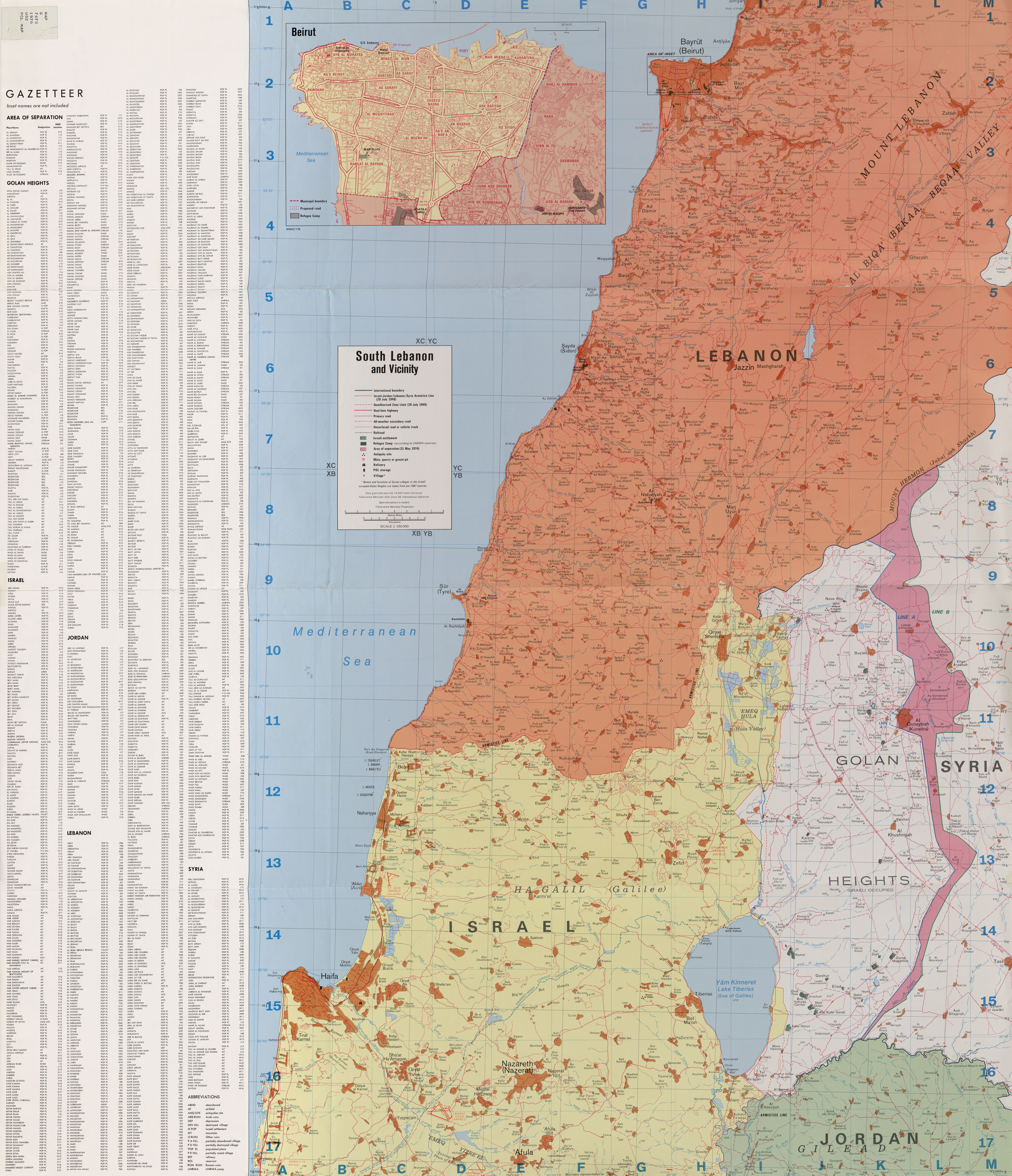
  31. South Lebanon and Vicinity 1976, CIA map.
  32. ↑ Murphy & Gannon 2008, p 48
  33. ↑ Yaqut al-Hamawi, cited in le Strange, 1890, p. 485
  34. ↑ « U.S. Committee for Refugees and Immigrants »(Archive.org • Wikiwix • Google • Que faire ?),

Bibliographie

  • Gideon Sulimani et Raz Kletter, « Settler-Colonialism and the Diary of an Israeli Settler in the Golan Heights: The Notebooks of Izhaki Gal », Edinburgh University Press, vol. 21, no 1,‎ (ISSN 2054-1988, DOI 10.3366/hlps.2022.0283)
  • icône décorative Portail d’Israël
  • icône décorative Portail de la Syrie
  • icône décorative Portail du conflit israélo-arabe